
What Is an SIA Licence? What Every London Business Owner Needs to Know

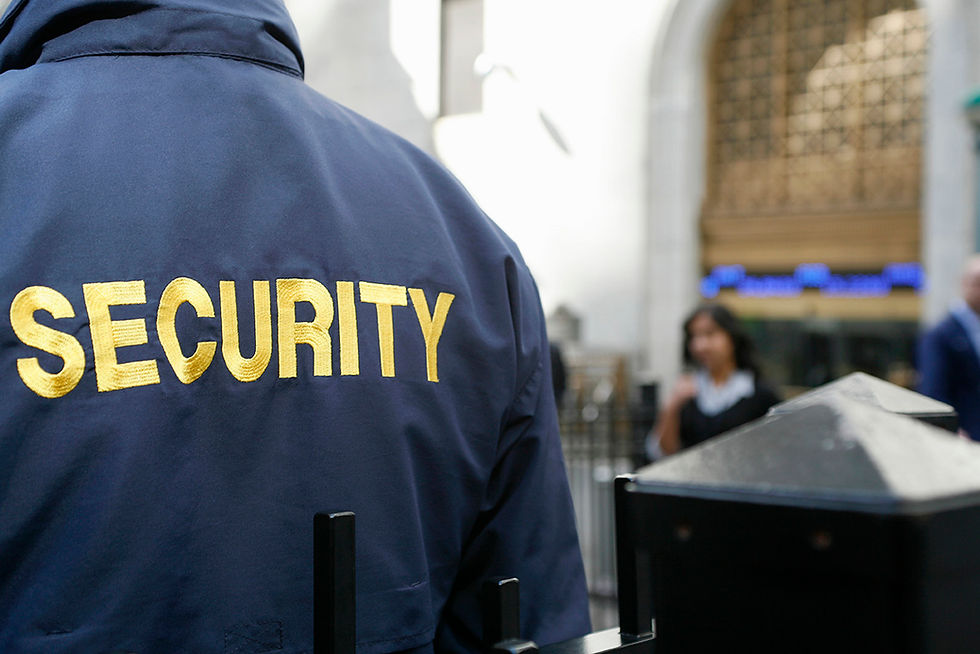
The SIA (Security Industry Authority) licence is the legal requirement for anyone working in a frontline security role in the UK. Without one, a guard cannot legally carry out that work, and hiring an unlicensed guard exposes your business to legal liability and possible insurance problems. Static guards, door supervisors, and CCTV operators all need the licence type that matches their role. Checking whether a guard or company is licensed takes under a minute using the SIA's free public register.
What the SIA actually is
The Security Industry Authority is the UK government body responsible for regulating the private security industry. It was set up under the Private Security Industry Act 2001, and its main job is licensing individuals who carry out certain security-related jobs, so that businesses and the public can be confident the person in front of them has passed background checks and met a minimum training standard.
For a London business owner hiring security, the SIA licence is the one credential that actually matters. A company can describe itself however it likes in a sales pitch — "fully vetted," "professional," "elite" — but the SIA licence is the one piece of paper with legal weight behind it.
Which licence types exist, and which jobs they cover
Not every security role needs the same licence. The SIA issues several licence categories, and a guard working under the wrong one is operating illegally even if they're genuinely licensed for something else.
Security Guarding — static guards and mobile patrol officers, typically at offices, retail premises, and construction sites but not venues / events with alcohol licences.
Door Supervision — door supervisors at pubs, bars, clubs, in static roles such as offices retail as well as venues & events selling alcohol such as night clubs & pubs.
CCTV (Public Space Surveillance) — operators monitoring public or semi-public space from a control room
Close Protection — bodyguards for high-net-worth or high-risk individuals
Vehicle Immobilisation — wheel-clamping operatives in private car parks (England and Wales only)
Cash and Valuables in Transit — staff handling cash transit for banks and retail cash collection
If you're hiring a static guard for an office reception, you specifically need someone holding a Security Guarding licence — a Door Supervision licence alone wouldn't cover that role, even though both sound similar to a non-specialist.
Why this matters to you as the buyer, not just the guard
It's easy to assume the licensing burden sits entirely with the individual guard or the security company. In practice, it lands on you too, in three ways.
Legal liability. Operating as a security guard without an SIA licence is a criminal offence under the Private Security Industry Act 2001. If you knowingly engage an unlicensed individual to carry out licensable activity, you can also be prosecuted as the business that used their services.
Insurance exposure. Most commercial liability and property insurance policies assume that any security provision on site is properly licensed. If an incident occurs and it later emerges your guard wasn't SIA-licensed, insurers have grounds to dispute or void a claim — meaning you could be left covering damages, injury costs, or theft losses entirely yourself.
Contract and tender risk. Many commercial leases, managing agent contracts, and public sector tenders now explicitly require evidence of SIA compliance from any security contractor on site. Failing to produce it can breach lease conditions or disqualify you from a tender.
How to verify a licence before you sign anything
You don't need to take a security company's word for it. The SIA publishes a free, real-time public register that anyone can use.
Ask the security company for the full name and SIA licence number of each guard assigned to your contract.
Go to the SIA's public register checker at www.sia.homeoffice.gov.uk and search by licence number or name.
Confirm the licence type matches the role — a Door Supervision licence does not cover static guarding duties, for example.
Check the expiry date. SIA licences are valid for three years from issue and must be renewed; an expired licence is functionally the same as no licence.
Keep a dated screenshot or PDF of the check for your own records, particularly if the contract is for an ongoing or high-footfall site.
This check takes a few minutes and should be standard practice before any contract is signed, not just at the point a problem arises.
What to ask a security company before hiring
A reputable provider will answer these without hesitation:
Can you confirm the SIA licence number and licence type for every guard you'll be deploying to my site?
What's your process if a guard's licence lapses mid-contract?
Are your guards directly employed, or subcontracted through another agency?
Do you carry public liability insurance that's specific to your security operations, separate from general business cover?
Can I see evidence of BS7858 vetting (the British Standard for security screening) for guards on my site?
Hesitation, vagueness, or an unwillingness to share licence numbers in writing is a clear warning sign.
Solomon's approach
Every guard Solomon's deploys across London holds the correct SIA licence for their assigned role, and we're happy to provide licence numbers for verification before a contract starts — not just on request after the fact. Our guards are also BS7858 vetted and DBS-checked, giving you a documented paper trail if it's ever needed for insurance or tender purposes. If you're currently working with a provider who hasn't offered this as standard, that's worth a conversation.
FAQs
Do all security guards in the UK need an SIA licence?
Yes, for any role involving licensable security activities such as guarding, patrolling, or door supervision. A small number of exemptions exist (for example, staff at certain low-risk premises), but the default assumption for contracted security services should be that a licence is required.
How much does an SIA licence cost?
As of April 2026, the SIA licence application fee is £204 (this applies to both first-time applications and renewals). A temporary £20 rebate had reduced this to £184 between 2020 and March 2026, but that rebate has now ended. This is the guard's own cost to obtain or renew their licence, not something the hiring business pays directly, but it's worth understanding so you know the credential represents a real ongoing cost on the guard's part.
What happens if I hire an unlicensed security guard without realising it?
You should stop using that guard immediately and verify the rest of your provider's team via the SIA public register. Depending on the circumstances, you may want to review your contract terms with the provider, since most professional security contracts include warranties that all deployed staff will be appropriately licensed.
Is a Door Supervision licence the same as a Security Guarding licence?
No. They're separate licence categories covering different activities. A guard with only a Door Supervision licence is not authorised to carry out general static guarding or patrol duties, and vice versa.
Related reading:

Comments