
Front of House Staff Duties: 8 Role Checklists for 2026

It's 8.40am and your lobby's already backing up. One visitor's waiting without a badge, a courier's at the side door, the phone's ringing, and the person on the desk is doing it differently from yesterday's shift. Nothing's gone badly wrong yet, but visitors can feel the inconsistency straight away.
That's the core problem with front of house staff duties. The tasks aren't mysterious. They fail when each person invents their own version of greeting, sign-in, badge issue, parcels, and escalation. I recommend treating every duty as a repeatable checklist with a clear record and a clear handover point, so a visitor at 7am gets the same standard as a visitor at 11pm.
The scale of the role supports that approach. The Office for National Statistics Census 2021 data for England and Wales recorded 195,238 people in the occupation group coded as receptionists. This is an established specialism, not a spare pair of hands. The eight checklists below cover what the desk does, where shifts usually drift, and what to hand over in writing.
Table of Contents
1. Guest Greeting and Reception Desk Management - The greeting checklist
2. Visitor Management and Sign-In Procedures - What to capture every time
3. Access Control and Badge Issuance - Badge discipline that holds
4. Telephone Answering and Switchboard Support - The message template
5. Business Concierge Coordination - Set the boundaries in writing
6. Residential Concierge and Parcel Handling - The parcel checklist
7. Incident Logging and Escalation - The standard incident entry
8. Emergency Procedures and Evacuation Support - Before, during, and after
How each front-of-house duty differs in records, escalation and shift standards
Turning Front of House Duties into a Standard Every Shift Can Follow
1. Guest Greeting and Reception Desk Management
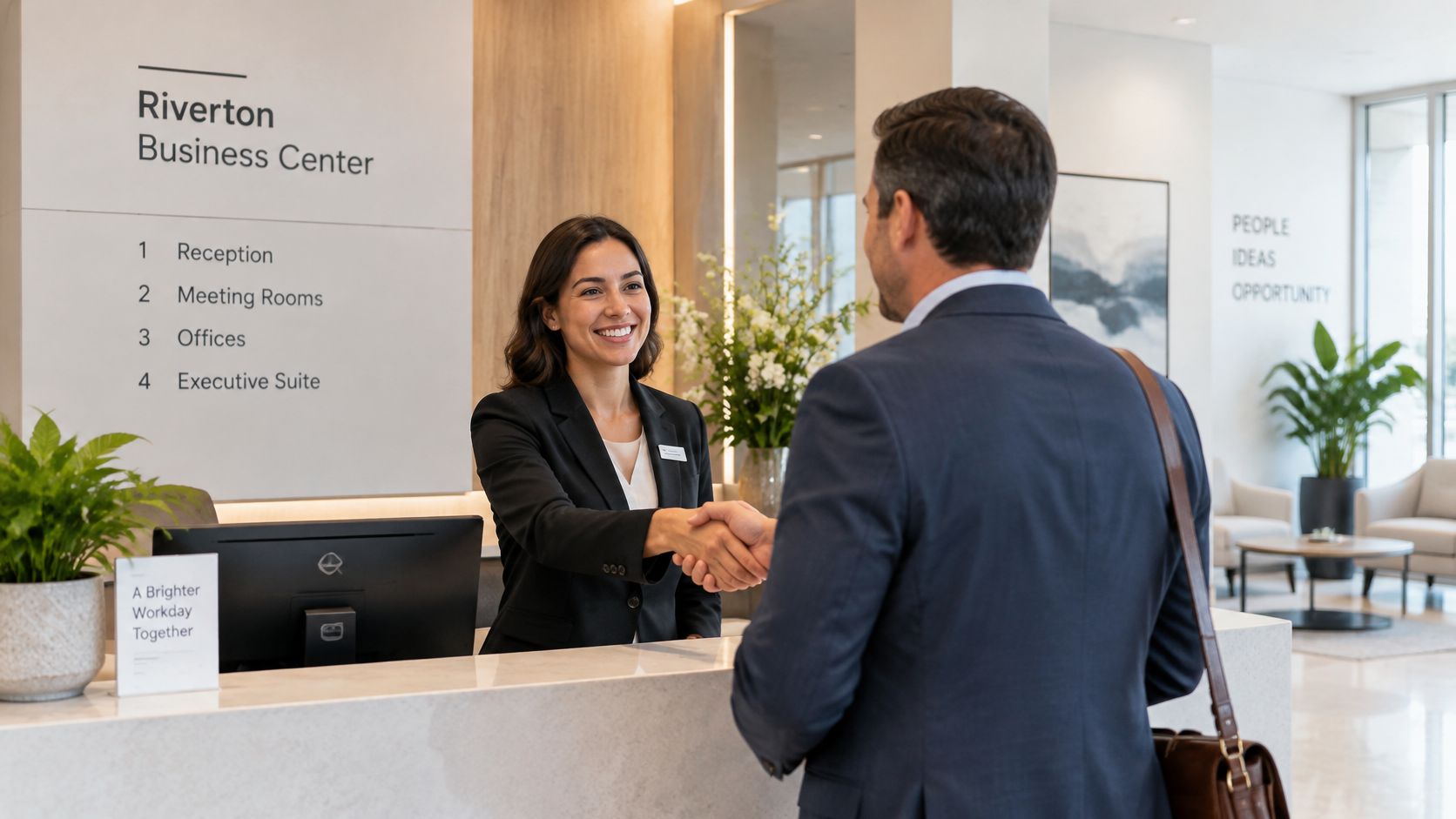
The desk sets the standard before a visitor reaches a lift. The UK National Careers Service receptionist profile describes receptionists as the first point of contact for visitors, with duties including greeting and directing visitors, managing sign-in, issuing security passes, answering enquiries, and handling post and deliveries. That's a control point, not just a welcome.
A multi-tenant City office during the 8.30 to 9.30 arrival window shows why triage matters. One person greets and confirms the host, a second processes sign-in, and nobody leaves the desk to escort unless cover's in place. In a Shoreditch serviced office, a dedicated greeter keeps members, guests, and couriers in separate flows so the lobby doesn't clog.
The greeting checklist
Stand and acknowledge fast: Make eye contact, use the same short greeting script, and ask who they're visiting.
Route, don't guess: Keep a current tenant directory and floor plan at the desk, checked weekly.
Staff the peak: Roster around known arrival peaks, not flat shift patterns.
Close the loop: Log unresolved enquiries for handover, don't rely on memory.
Reception quality is measurable. An ISS benchmark covering 136,102 responses reported friendliness of reception staff scored 4.20 out of 5, the highest-scoring service touchpoint. Track greeting time and queue length alongside feedback, and build consistency through a structured front of house training programme and sensible front of house system integrations that support the desk rather than slowing it.
Handover standard: Uncollected visitors, expected VIPs, directory changes, and any lobby fault, written and timed.
2. Visitor Management and Sign-In Procedures
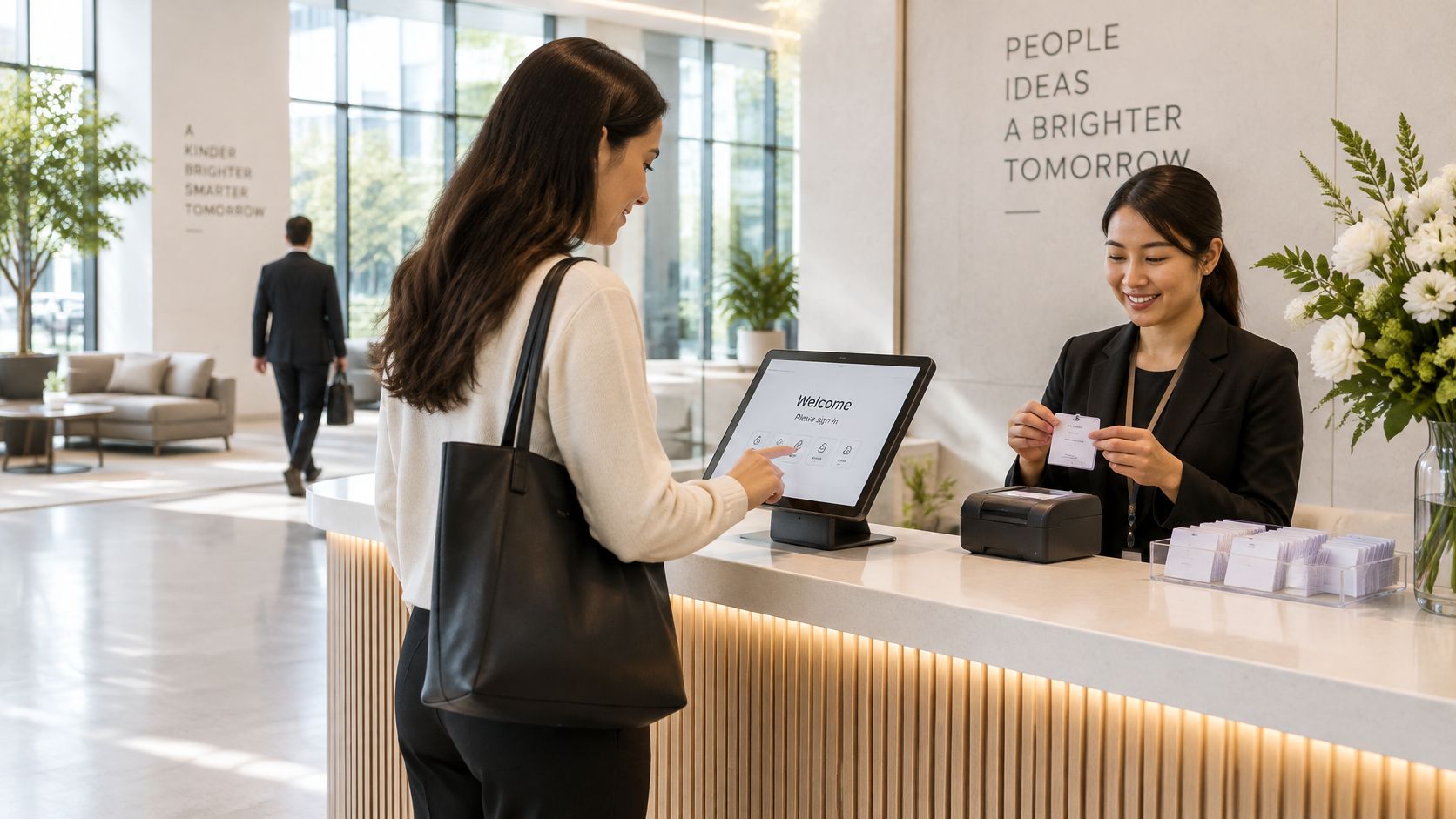
A visitor log needs to show who is in the building, who they are visiting, when they arrived, and whether they have left. If staff cannot find those details quickly, the record will not help during a busy shift or an evacuation.
Many offices still rely on paper or spreadsheet visitor logs. These can be hard to read, do not show occupancy in real time, and may not provide a reliable evacuation list. A digital system can make records easier to retrieve, but staff still need a clear sign-in routine and a manual fallback for outages.
What to capture every time
Record the visitor's name, company, host, arrival time, badge number, and departure time. Collect no more than the site requires. Display a short privacy notice explaining what is recorded and how long it is kept. For residential buildings, confirm resident approval for tradespeople and record each contractor's arrival and departure.
A consistent visitor management process helps staff keep records accurate across shifts.
Practical rule: If a visitor has not been pre-registered, get host approval before completing sign-in.
Check the log regularly for missing departure times and duplicate entries. Show staff how to explain the sign-in process in one sentence. Keep a manual fallback sheet available and make sure the incoming shift knows where it is.
Handover standard: Record visitors still on site, expected arrivals, system faults, and any entry that needs correcting. The next shift should review these items before processing new arrivals.
3. Access Control and Badge Issuance
Access control is where hospitality meets a hard boundary. The desk verifies a legitimate purpose, issues the right credential, and stops unauthorised people moving beyond public areas. Done well, legitimate visitors barely notice it. Done badly, you get either tailgating or a queue of annoyed guests.
Police-backed ProtectUK site security guidance says visitors and contractors should report to reception, sign in, wear visible passes, receive a legitimate-purpose check, and be escorted outside public areas. It also stresses balance. Entry shouldn't create unnecessary delay, and public and private areas should be clearly marked.
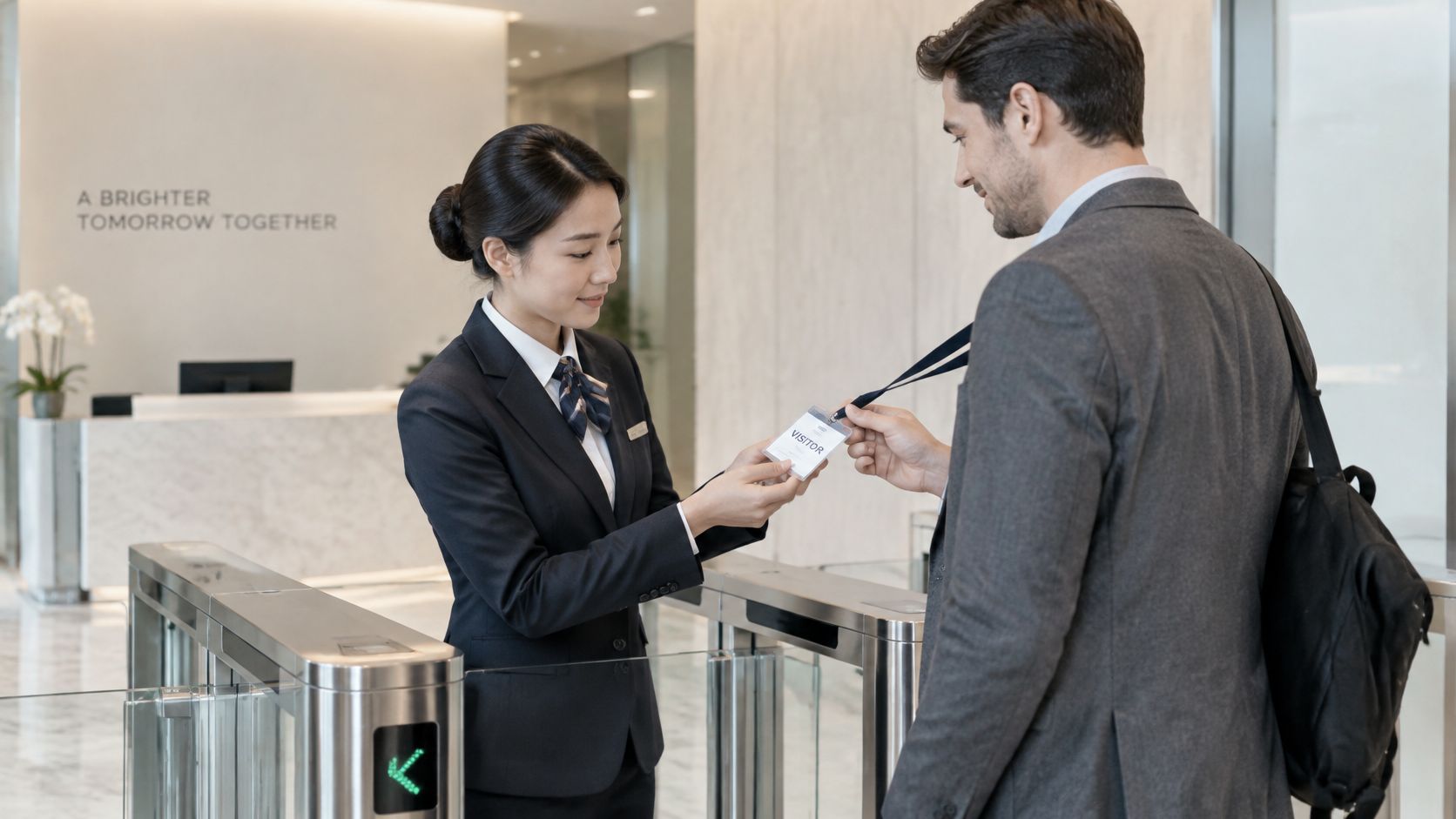
Say an event venue issues colour-coded wristbands for crew, performers, and media. Reception checks each category against a list before entry, because a wristband without verification is just decoration. A retail service yard works the same way. Badges go to delivery drivers at the barrier and come back at exit, every shift, no exceptions.
Badge discipline that holds
Live register: Badge number, name, host, issue time, and expiry, reconciled at shift end.
Time limits: Temporary badges expire the same day unless a manager extends them in writing.
Lost badge response: Deactivate, record, reissue only after host reconfirmation.
Refusal path: Politely hold the person in the public area and call the named manager or security.
Don't ask reception staff to physically block anyone. Their job is proportionate verification, a calm challenge, and fast escalation. Define in writing what they may challenge, when they call security, and how they record tailgating or a missing pass.
Handover standard: Unreturned badges by number, deactivated credentials, and anyone refused entry, with times.
4. Telephone Answering and Switchboard Support
A ringing phone at an empty desk undoes a good lobby. Callers can't see you're busy with a visitor. They only hear delay, so switchboard work needs its own checklist rather than being squeezed between arrivals.
Answer with the building name, your name, and an offer to help. Identify the caller, route the call, and stay on the line until transfer is accepted for urgent matters. Cold transfers to voicemail are where enquiries disappear. A Canary Wharf serviced office handles this by routing urgent building issues straight to the duty manager while routine enquiries follow the tenant directory. A residential concierge team does the same out of hours for parcels and maintenance, logging each message for the morning manager.
The message template
Every message needs caller name, company or flat number, callback number, reason, urgency, and time taken. Read the number back. It sounds basic, and it's the step staff skip when the desk gets busy.
Immediate escalation: Security incidents, alarms, leaks, lift entrapments, and anyone reporting a person at risk.
Same-shift routing: Maintenance faults, meeting room problems, and delivery access.
Next working day: General enquiries, brochure requests, and non-urgent tenant queries.
Keep a live contact directory with out-of-hours numbers at the desk and in the phone system. Review call logs monthly. If the same question appears every week, fix the signage, tenant handbook, or directory instead of asking staff to absorb it forever. Our reception teams handle the telephone switchboard alongside visitor welcome because both tasks need the same current contact information.
Handover standard: Unreturned calls, urgent messages awaiting confirmation, and any directory number that failed during the shift.
5. Business Concierge Coordination
Business concierge work is tenant coordination, not favours on request. Meeting rooms, contractor access, catering, AV, couriers, directions, and facilities requests all land at the desk. Without a shared log, the loudest tenant gets served first and quiet requests vanish at shift change.
A King's Cross multi-tenant building runs this properly with a shared request log. Each job gets an owner, a time, and a status tenants can check. Response times go into quarterly reviews, so service arguments are settled by records. A coworking provider uses the same log for event catering and AV set-up for member launches, because those jobs fail on timing, not effort.
Staffing reality matters here. London hospitality sector engagement research reported 46,000 vacancies in London's hospitality sector were hard to fill because of skills shortages in 2024, representing 24% of vacancies. You can't keep adding concierge duties to one person and expect greeting, phones, and access control to hold. I recommend separating peak concierge cover from the sign-in desk where request volume is high.
Set the boundaries in writing
Included services: Room bookings, visitor directions, contractor notifications, and standard facilities requests.
Chargeable services: Extended event support, bulk printing, and dedicated courier coordination, agreed in the contract.
Response targets: Acknowledge fast, give a completion time, and update the log if it slips.
Feedback loop: Ask tenants quarterly what's slow, then change one thing and tell them.
Shifts go wrong when concierge jobs are promised verbally. Don't accept a request without logging it while the tenant's still standing there.
Handover standard: Open requests by tenant, promised times, rooms booked for the next shift, and contractors expected.
6. Residential Concierge and Parcel Handling
In residential buildings the desk serves people at home, which changes the tone and the risk. Residents expect recognition, discretion, and help with parcels, maintenance reports, keys where authorised, and moving days. They also notice instantly when a relief concierge doesn't know the building.
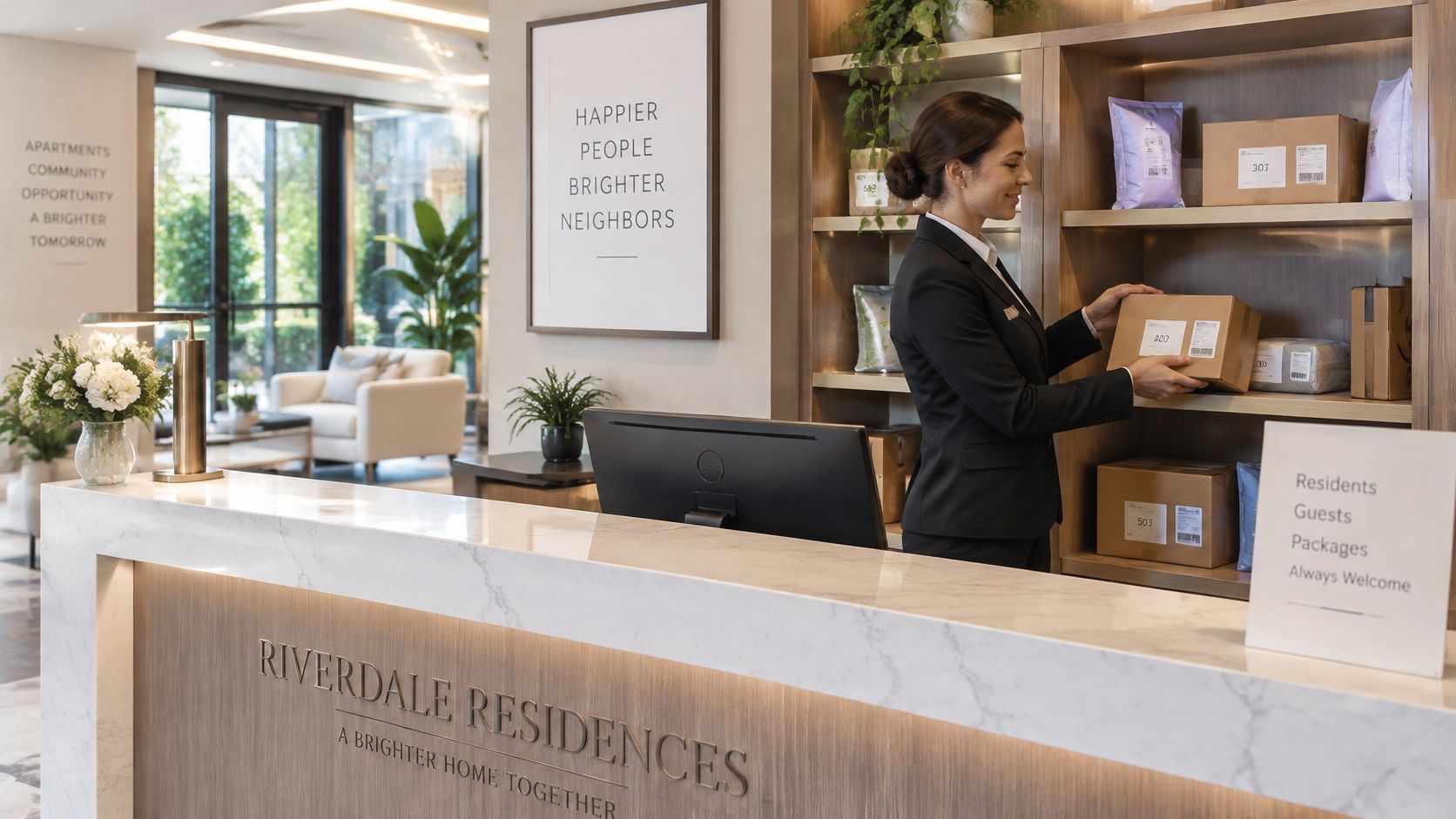
Parcels are the daily pressure point. A Canary Wharf apartment building pairs parcel lockers with concierge logging, so reception isn't buried in boxes. A North London mansion block uses a digital log that texts residents on arrival and records collection with a signature. Both systems beat a handwritten book and a pile behind the desk, which is where disputes start.
The parcel checklist
Log on arrival: Resident name, flat, courier, time, and storage location, with barcode or label tracking.
Notify once, clearly: Tell the resident where it is and how long you'll hold it.
Verify collection: Check name and flat, record who collected it and when.
Set a retention period: Publish it to residents and enforce it, or storage fills within weeks.
Define liability for stored items in the service agreement before there's a loss to argue about.
Follow the building's safety procedures for damaged, leaking or suspicious packages. Do not handle potentially hazardous items unnecessarily, and report concerns immediately to the building manager or security team.
Moving days need their own sheet covering lift booking, access route, common area protection, and parking. Book it, brief the next shift, and inspect the route afterwards. That's where damage claims are won or lost.
Handover standard: Parcels awaiting collection, maintenance reports raised, keys signed out where permitted, and moves booked.
7. Incident Logging and Escalation
Front of house staff usually see trouble first. A tailgater, an argument in the lobby, a suspicious bag, repeated noise at night, a delivery driver blocking a fire exit. The duty isn't to solve everything. It's to record accurately and escalate at the right threshold.
A London retail site that logs a shoplifting attempt with time-stamped detail gives police something usable alongside CCTV. A residential block that logs repeated night noise with dates and flats affected can justify changing patrol timing. Vague entries like "incident in lobby" help nobody and won't support an insurance claim or an investigation.
Write the log for the person who wasn't there. If they can't reconstruct the event from your entry, it isn't finished.
The standard incident entry
Who and what: People involved, what happened, in factual sequence without opinion.
Where and when: Exact location and times, including when help was called.
Action taken: Who attended, what was secured, and whether CCTV was bookmarked.
Outcome and follow-up: Injury, damage, police reference if given, and who owns the next step.
Set escalation thresholds staff don't have to debate. Violence, weapons, fire, serious injury, and forced entry go straight to emergency services and the duty manager. Lower-level disorder goes to security or a supervisor first.
For further guidance on recording workplace accidents and incidents, see this practical overview of accident reporting procedures.
Store logs securely, retain them to contract requirements, and review trends monthly so repeat locations get patrol or lighting changes.
Shifts go wrong when staff wait to "see how it develops". Log early, escalate early, downgrade later if it's nothing.
Handover standard: Open incidents, CCTV bookmarks, police or manager references, and any person or vehicle to watch.
8. Emergency Procedures and Evacuation Support
Reception holds the two things an evacuation needs most. The visitor register and control of the entrance. That makes front of house central to fire response, whether or not the job title mentions safety.
A multi-tenant office running quarterly drills uses reception to complete the roll call at the assembly point from the live visitor list. An event venue posts front of house staff on exit routes with radios to the control room, because crowds follow a visible person faster than they follow signage. Both only work if the register was accurate before the alarm sounded.
Before, during, and after
Keep the evacuation plan, fire panel instructions, and assembly point details at the desk and digitally. Train every team member on the alarm panel, emergency communications, and their exact role. Don't assume agency cover knows it. Check personal evacuation plans for staff and regular visitors with mobility needs, and make sure the on-shift team knows who needs assistance and which refuge or evacuation lift applies.
During an alarm, front of house staff should follow the building's agreed emergency procedures. Depending on their assigned role, this may include taking the visitor register, directing people towards designated exits, helping prevent re-entry where safe, and reporting anyone unaccounted for to the fire warden or incident controller. Staff must not put themselves at risk or re-enter the building to search for missing people. Afterwards, record the incident details and any follow-up actions required.
Keep first aid arrangements and evacuation responsibilities aligned with the building's wider incident response procedures.
Run drills at varied times, including busy and out-of-hours periods. A drill that only happens on a quiet Tuesday proves very little.
Handover standard: Alarm panel status, drill or activation outcome, evacuation plan changes, and residents or staff needing assistance.
How each front-of-house duty differs in records, escalation and shift standards
Duty | Main Records Kept | Typical Escalation Route | Shift Standard to Check |
|---|---|---|---|
Guest Greeting and Reception Desk Management | Visitor enquiries and feedback, where recorded | Reception backup or switchboard support for high enquiry volumes | Prompt professional greeting, current directory and clear reception area |
Visitor Management and Sign-In Procedures | Visitor sign-in/out log, identity checks and badge records | Host approval for unregistered visitors; site security for concerns | Complete, accurate entries; badges issued and collected; privacy procedures followed |
Access Control and Badge Issuance | Badge issue, return, loss and damage register | Security staff for unauthorised or suspicious access attempts | Credentials checked; temporary badges tracked and reconciled |
Telephone Answering and Switchboard Support | Call and message logs, including urgency and follow-up | Duty manager or on-call contact for urgent issues | Standard greeting, accurate messages and current contact directory |
Business Concierge Coordination | Shared tenant request log and booking records | Facilities team for building works or operational requests | Requests tracked with clear status and agreed response times |
Residential Concierge and Parcel Handling | Parcel receipt and collection log, resident and maintenance requests | Building manager or maintenance team for reported issues | Parcels securely stored and tracked; collections recorded |
Incident Logging and Escalation | Secure incident log with details, actions and reports | Security supervisor or building manager; emergency services when required | Timely, complete incident records and escalation per site thresholds |
Emergency Procedures and Evacuation Support | Visitor register and evacuation roll-call records | Building wardens and fire service | Emergency plan and register accessible; staff follow evacuation procedures and assist as trained |
Turning Front of House Duties into a Standard Every Shift Can Follow
Start small and make it physical. Turn each duty above into a one-page checklist that lives at the desk, not in a shared drive nobody opens during a busy arrival peak. Each sheet needs the action, the record it creates, and the escalation point. If a checklist doesn't say who to call, it isn't finished.
Then make handover essential. Ten minutes, face to face where possible, backed by written notes covering visitors on site, unreturned badges, parcels, open concierge jobs, incidents, and expected arrivals. Verbal handovers drift. Written handovers can be audited. I recommend a supervisor reads handover notes and visitor logs every week, because gaps show up as patterns long before they become complaints. Missing departure times, repeated lost badges, and slow host notifications each point to a different fix.
Be honest about workload. One person cannot greet, run a switchboard, manage couriers, monitor access, handle parcels, and lead an evacuation roll call to the same standard at peak times. Decide which duties need documented training, which need backup cover, and which belong to a separate security function. Challenging unknown people, handling sensitive visitor data, and managing evacuation information sit in the higher-risk group. Don't assign them casually to whoever's free.
Measure a few things well. Track check-in completion, badge return rate, host notification time, message accuracy, and incident log completeness. Pair those with short visitor feedback so you can tell a coaching problem from a staffing problem. A warm welcome with long queues means you need cover, not a script rewrite. Fast processing with poor welcome scores means the opposite.
Consistency also comes from continuity of people. Every team member we deploy is briefed on your access procedures, visitor protocols, and site-specific requirements before their first shift, and we aim for the same staff to return so they learn your tenants, residents, and routines. Solomon's Facilities Management provides trained, vetted reception and concierge teams across Central, East, and North London under one accountable contract. If your desk feels different on every shift, fix the checklists, the handover, and the cover model first. The welcome improves when the system behind it holds.
If your building needs reception, visitor management, and concierge cover that runs to the same checklist on every shift, Solomon's Facilities Management can staff your desk with a consistent, site-briefed team across London.
Visit Solomon's Facilities Management to discuss your front of house requirements and arrange cover for your site.

Comments