
Hard FM Services: A Practical Guide for London Buildings

At 8:42 on a Monday morning in a 14-storey office near Liverpool Street, the facilities manager is already dealing with three unrelated faults. A lift has stopped between floors, a tenant on level nine has reported no cooling, and the revolving entrance door is making an expensive-sounding grind. Three subcontractors are on the phone, each asking for access, drawings, isolation details, or confirmation that the fault sits inside their scope.
That isn't an unusual picture in London buildings. It's what fragmented maintenance looks like when the systems that keep a property operational are managed as separate problems. Hard FM services bring those engineered assets into a controlled maintenance programme, with clear ownership, planned inspections, competent technicians, and records that stand up to scrutiny.
Table of Contents
What Hard FM Services Actually Mean for a London Building
Hard FM services cover the physical and technical systems fixed into a building. They include the equipment and fabric that keep an office, residential block, retail site, or mixed-use estate safe, powered, ventilated, accessible, and lawful to occupy.
In practical terms, the scope can include:
Mechanical systems: HVAC, chillers, air handling units, fan coil units, boilers, pumps, and building management systems.
Electrical infrastructure: Distribution boards, emergency lighting, generators, switchgear, lighting controls, and associated testing.
Vertical transport: Lifts, escalators, controls, safety equipment, and inspection arrangements.
Water systems: Plumbing, drainage, water treatment, hot water plant, and legionella control measures.
Building fabric: Roofs, glazing, doors, cladding, ceilings, plant-room enclosures, and weatherproofing.
Safety-critical assets: Fire detection, fire alarms, smoke control, emergency systems, and related interfaces.
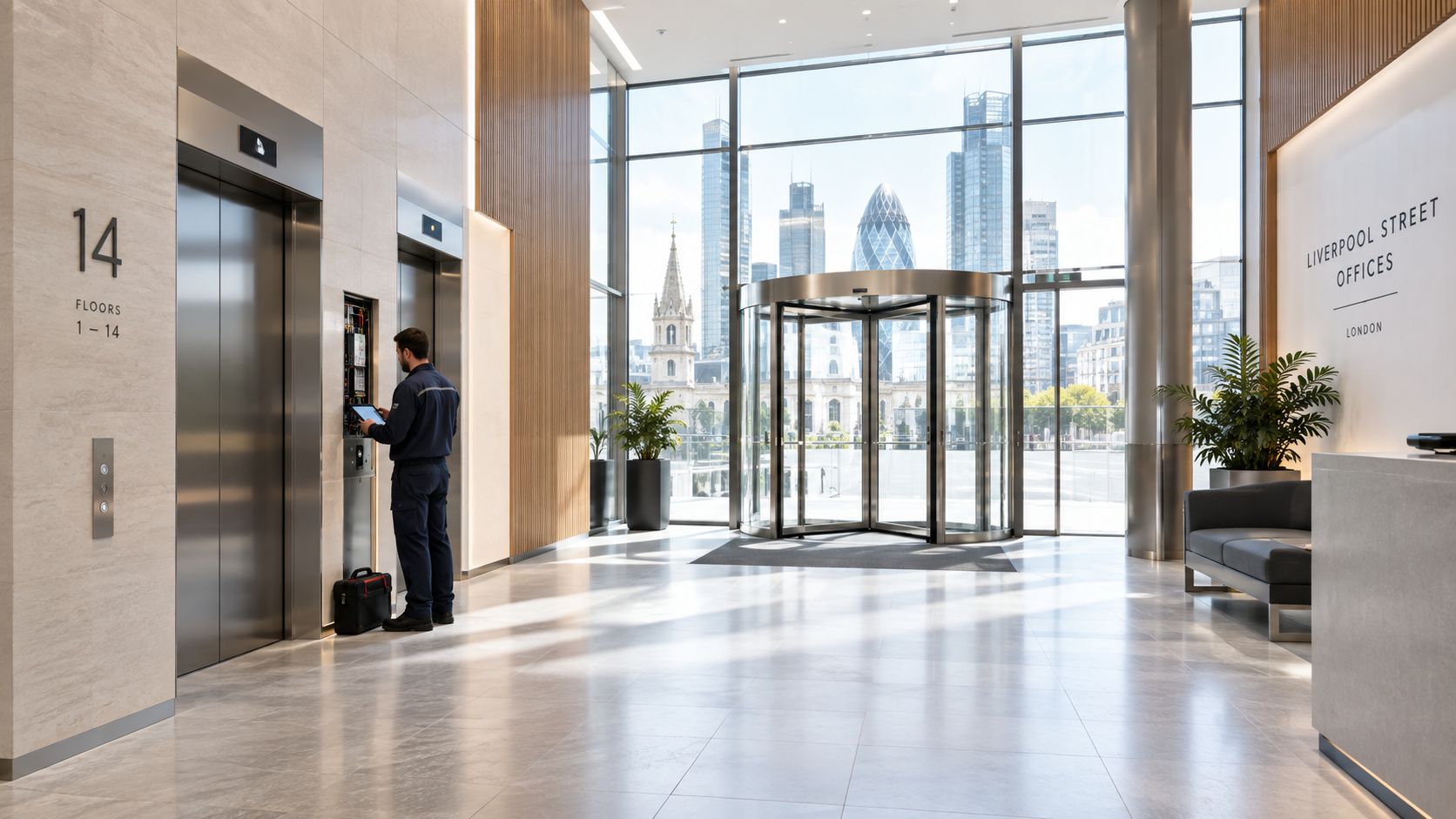
The discipline is defined by assets and duties, not just by the number of engineers on site. A hard FM team maintains equipment against planned schedules, manufacturer requirements, statutory inspections, risk assessments, and agreed response procedures. When something fails, the team should already know the asset's location, criticality, service history, isolation requirements, and likely spare parts.
That preparation changes the Monday morning scenario. The lift fault becomes a prioritised work order. The cooling complaint can be checked against the BMS and recent AHU readings. The door issue can be inspected by someone who understands how the entrance system affects access control, security, and public safety. The facilities manager still has problems to resolve, but doesn't have to spend the first hour deciding who owns them.
The UK facilities management market was valued at £47.2 billion in 2020 and was projected to reach £52.2 billion by 2026, with an implied compound annual growth rate of 1.41%, according to the UK facilities management market intelligence report. That scale reflects the operational importance of outsourced building support, particularly where commercial and public-sector clients need accountable service delivery.
Hard FM Versus Soft Services and Why the Split Matters
The distinction is straightforward. Hard FM maintains the building's engineered infrastructure. Soft services support the people and the day-to-day experience inside it.
Dimension | Hard FM | Soft FM |
|---|---|---|
Primary focus | Fixed assets, engineering systems, and building fabric | Occupant experience, site support, and visible service delivery |
Typical scope | HVAC, electrical, lifts, plumbing, fire systems, fabric repairs | Cleaning, security, reception, concierge, waste, landscaping, pest control |
Main evidence | PPM records, inspection certificates, RAMS, asset histories | Attendance records, cleaning audits, incident logs, coverage reports |
Core competencies | Engineering qualifications, statutory knowledge, technical supervision | Service training, site procedures, customer care, operational supervision |
Common commercial measures | Asset availability, compliance completion, response and resolution | Coverage, presentation, response, quality, and customer satisfaction |
A hard FM contract usually follows asset-specific maintenance schedules, statutory inspection cycles, risk assessments, and method statements. Soft service contracts are more often organised around staffing levels, coverage hours, response times, presentation standards, and customer-facing outcomes. The two models can operate under one supplier, but they shouldn't be confused.
For example, a failed access-controlled door may involve a door closer, electrical lock, fire alarm interface, security procedure, and reception response. The physical repair belongs in the hard FM scope, while managing the temporary access arrangement may sit with security or reception. A clear responsibility matrix prevents both teams from assuming the other has dealt with the risk.
Practical rule: Classify the duty first, then assign the contractor. If the task is tied to the building's physical operation or statutory safety, it needs a defined hard FM owner.
Procurement teams should document the boundary rather than rely on informal understanding. The difference between facilities management soft services is useful when building that scope, particularly for mixed-use properties where engineering, security, cleaning, and front-of-house teams share the same incidents.
The split matters because compliance evidence, insurance, competence, and escalation routes run differently. A cleaning supervisor can't sign off an electrical inspection, and an electrical contractor isn't automatically responsible for maintaining visitor control while a fire door is isolated. Good contracts make those interfaces explicit.
Planned Preventive Maintenance Versus Reactive Repairs
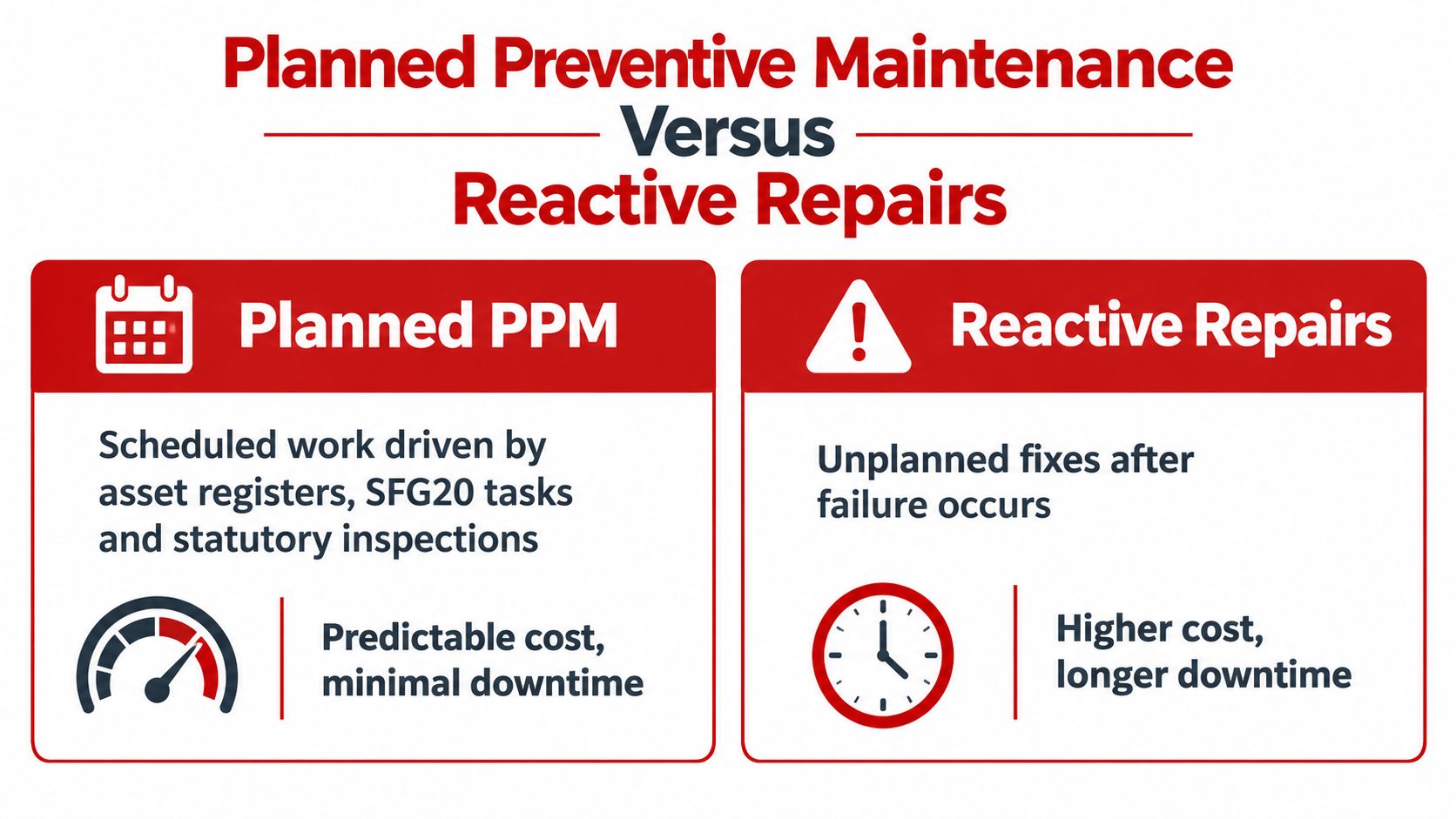
Planned preventive maintenance, or PPM, is scheduled work carried out against an asset register. The schedule draws on manufacturer guidance, statutory obligations, risk assessments, and recognised maintenance task libraries. The engineer visits before failure, checks the equipment, records readings and defects, and raises remedial work while the issue is still manageable.
Reactive repair starts after the failure. A pump has seized, a circuit has tripped, a chiller has stopped, or a leak has reached an occupied area. Reactive work is necessary, but it should be treated as a controlled exception rather than the operating model.
Consideration | Planned preventive maintenance | Reactive repairs |
|---|---|---|
Timing | Agreed in advance | Triggered by failure or complaint |
Cost profile | More predictable labour, access, and parts planning | Greater exposure to emergency labour, access, and temporary measures |
Occupant impact | Work can be coordinated around building use | Failure may interrupt tenants without warning |
Compliance record | Produces scheduled inspection and task evidence | Shows response activity, but doesn't replace planned inspections |
Management focus | Condition, trend, and lifecycle planning | Restoration, diagnosis, and immediate risk control |
The financial difference isn't limited to the engineer's invoice. A planned AHU visit can be coordinated with tenant access, isolation windows, filters, belts, and known replacement parts. A Sunday-night call-out may also involve emergency access, temporary cooling, tenant disruption, water damage, overtime, and reputational pressure. The precise cost depends on the asset and contract, but the risk is less predictable.
PPM also gives the duty-holder an evidence trail. Completed job cards, inspection certificates, photographs, readings, defects, and approvals show what the contractor checked and what happened next. That record supports compliance and governance under relevant obligations, including the Electricity at Work Regulations and, where applicable, duties under the Building Safety Act.
A common failure is to report a visit as “HVAC serviced” without identifying the unit, checks completed, readings taken, defects found, or follow-up actions. That entry may satisfy a dashboard but won't help an auditor, a new contractor, or a facilities manager trying to understand why a tenant complaint keeps returning.
Reactive maintenance restores service. PPM gives you a chance to control the conditions that cause failure.
The right contract includes both. It sets a clear PPM baseline, defines priority bands for faults, and separates routine remedial works from genuine emergencies. That lets finance teams see where the budget is going and lets the facilities lead challenge repeated failures rather than accepting them as normal.
The Core Disciplines Inside Hard FM
A hard FM scope should be written by asset class, not as a vague promise to “maintain the building”. Each discipline needs a defined boundary, competent resource, planned tasks, response arrangements, and evidence requirements.
Discipline | Asset scope | PPM frequency | Compliance reference |
|---|---|---|---|
HVAC | Chillers, AHUs, FCUs, pumps, controls, BMS interfaces | Set by asset risk, manufacturer guidance, and task schedule | SFG20, F-Gas requirements, manufacturer instructions |
Electrical | LV distribution, switchgear, emergency lighting, lighting controls, generators | Set by system criticality and statutory testing needs | BS 7671, Electricity at Work Regulations |
Plant rooms | Boilers, pressurisation, water treatment, pumps, outstations | Scheduled around plant type, condition, and operating demand | SFG20, manufacturer requirements, water-control procedures |
Building fabric | Roofs, glazing, doors, cladding, ceilings, seals | Planned inspections with seasonal and condition-based reviews | Building safety duties, access and risk controls |
Plumbing and drainage | Water services, above-ground drainage, rainwater goods, hot-water plant | Risk-based inspection and treatment schedule | Legionella control guidance, SFG20 |
Lifts | Traction or hydraulic equipment, controls, safety devices | Planned servicing with statutory examination arrangements | LOLER, manufacturer requirements |
HVAC and controls
A credible HVAC scope names the equipment. It should state whether the supplier maintains chillers, cooling towers, AHUs, fan coil units, pumps, valves, sensors, actuators, and BMS points. Good delivery includes advance RAMS, verified isolation procedures, recorded operating readings, filter and belt checks, and defects categorised by urgency.
F-Gas evidence needs its own discipline. The contract should identify who records refrigerant work, which assets are covered, and where certificates and service records are stored. A BMS alarm shouldn't just be acknowledged and closed. The engineer should establish whether the alarm reflects a failed sensor, control issue, plant fault, or genuine environmental condition.
Electrical systems and plant rooms
Electrical maintenance must distinguish routine checks from intrusive work. The scope should cover distribution boards, switchgear, emergency lighting, generators, lightning protection, and relevant portable equipment testing arrangements. It should also define who can isolate systems and how the building remains safe while the work takes place.
Plant rooms reveal whether a supplier understands the estate. Boilers, pressurisation units, pumps, water-treatment equipment, and BMS outstations often interact, so a fault in one system can present as a problem in another. Named engineers, controlled access, clean records, and agreed critical spares matter more than a generic attendance promise.
Fabric, water, and lifts
Building fabric work is often under-scoped until a roof leak reaches occupied space or a failed door affects fire separation. Include roofs, cladding, glazing, doors, suspended ceilings, seals, and access equipment in the asset register, with planned inspections and a route for capital recommendations.
For plumbing, define above-ground drainage, rainwater goods, pumps, hot-water systems, water treatment, and legionella controls. Lift scopes should identify each lift, servicing responsibilities, breakdown response, examination arrangements, and the interface with tenant communications.
The service standard should be visible across every discipline:
Named competence: The client knows who is authorised to perform specialist work.
Prepared visits: RAMS, access requirements, and isolation plans arrive before attendance.
Controlled parts: Critical spares are agreed, traceable, and called off against the right asset.
Priority response: The contract sets response and restoration expectations by fault category.
Closed-loop records: Defects remain open until an authorised person confirms the corrective action.
How SFG20 and CAFM Systems Structure Maintenance Schedules
SFG20 provides a recognised structure for turning technical obligations into repeatable maintenance tasks. It is described as the UK industry standard for building maintenance specifications, with a library of more than 2,000 maintenance schedules covering more than 70 asset types, including HVAC, electrical, plumbing, lifts, BMS, and related plant, as explained by SFG20's facility maintenance guidance.
The value isn't the label on the schedule. It's the link between an actual asset and an auditable job.
A practical workflow looks like this:
Register the asset: Record the AHU's location, manufacturer, model, duty, criticality, last refurbishment, and available technical documents.
Assign the task: Match the asset to the relevant SFG20 schedule, manufacturer instructions, statutory duties, and site-specific risk controls.
Generate the job: The CAFM system creates the planned visit, assigns the right engineer, sets access requirements, and establishes the due date.
Close the evidence: The engineer records readings, photographs, defects, parts, and follow-up actions on a mobile job card. A supervisor reviews the completion before closure.
That process creates consistency across a London estate. The same asset type can carry the same task definition at different postcodes, while local access, occupancy, plant configuration, and risk controls remain visible. A client-side team can then compare overdue tasks, recurring defects, open remedials, and compliance folders without reconstructing the information from separate contractor spreadsheets.
The CAFM configuration should also reflect real governance. F-Gas records, legionella evidence, LOLER documentation, certificates, photographs, and approvals need clear ownership and retention rules. Dashboards are useful only when the underlying job cards are accurate. A green completion percentage can't compensate for an asset register that omits equipment or a task description too vague to prove what the engineer did.
For multi-site managers, the strongest outcome is portable knowledge. If a contract changes, the client retains the asset history, not just a collection of invoices. That makes mobilisation, audit preparation, and lifecycle decisions far less dependent on one individual's memory.
Why Consolidating Hard FM Under One Supplier Changes Accountability
A multi-vendor model can work when the client has the time and technical capacity to manage interfaces. In practice, a London building often ends up with separate contractors for HVAC, electrical systems, fabric repairs, and lifts, plus different helpdesks and reporting formats. The facilities manager then becomes the integration layer.
A single supplier changes four daily operating levers.
Dimension | Multi-vendor model | Single-supplier model |
|---|---|---|
Accountability | Fault ownership can be disputed at trade boundaries | One contract and escalation route define ownership |
Response | Helpdesks and subcontractor hand-offs may delay diagnosis | One triage process can assign the right resource |
Reporting | Separate certificates, job numbers, and monthly reports | Consolidated CAFM records and review pack |
Total cost | Multiple management fees, mobilisations, and access arrangements | Shared coordination, resources, and commercial control |
Consider a leak from an AHU condensate pan that reaches electrical containment. Under separate contracts, the HVAC contractor may identify the source, the electrical contractor may make the affected system safe, and a fabric contractor may deal with the resulting damage. If each supplier treats the incident as outside its responsibility, the building manager loses time while the risk remains live.
With one hard FM supplier, the incident can sit under one work order with linked tasks. The supplier can allocate an HVAC engineer, electrical technician, and fabric resource, while one contract manager owns communication, access, evidence, and close-out. That doesn't remove the need for specialist competence. It removes the argument about who coordinates it.
The single-supplier benefit isn't that one engineer can do every trade. It's that one accountable party coordinates the trades without making the client do the chasing.
Consolidation also makes performance reviews more useful. The facilities manager can compare recurring HVAC defects with tenant complaints, electrical interruptions, access issues, and remedial spend in one conversation. The integrated facilities management model provides a useful reference point for understanding how broader FM coordination can sit under one accountable arrangement.
There is a trade-off. A large supplier may subcontract specialist work, and a single contract can hide weak performance if the client accepts a glossy dashboard without checking the underlying records. The contract must therefore preserve named competence, transparent subcontracting, direct client access to CAFM data, and the right to challenge poor diagnosis.
Hard FM as a Risk and Lifecycle Decision in 2026
Hard FM procurement is no longer just a decision about who attends when a boiler fails. It determines how a building owner understands risk, proves compliance, and decides whether an ageing asset deserves another repair or a planned replacement.
UK market coverage identifies ageing assets, Building Safety Act compliance, PFI expiry, net-zero retrofit demand, and constrained specialist skills such as Gas Safe, F-Gas, and HV electrical as important pressures on hard FM delivery. The UK integrated facility management market analysis describes that combination as part of the environment in which buyers are increasingly seeking integrated support.
London's older offices and mixed-use buildings expose the problem quickly. A chiller can remain operational through repeated repairs, but the maintenance team should record the age, failure pattern, parts availability, energy performance, refrigerant position, and operational consequence. “Repair” may be the correct answer for a recoverable defect. It may be poor stewardship when the same unit repeatedly threatens tenant comfort and business continuity.
The market is large enough for integrated services to sit within long-term contracts. One UK estimate valued facilities management at about USD 81.09 billion in 2025, projected USD 83.29 billion in 2026 and USD 95.24 billion by 2031, with a forecast CAGR of 2.71% from 2026 to 2031, as set out in the UK facility management market forecast. Those figures describe a broad market, but they also show why buyers need to distinguish a genuinely integrated contract from a bundle of disconnected work orders.
A consolidated supplier can surface lifecycle evidence across disciplines. The same review can show that poor cooling links to control faults, that water ingress is affecting electrical assets, or that repeated lift breakdowns justify a capital conversation. Fragmented delivery tends to produce isolated repair histories, which conceal the relationship between asset condition and operational risk.
The financial context matters. A 2025 UK estimate places annual hard FM contract value at £18.2 billion, projected to grow to roughly £19.3 billion by 2028, while a separate benchmark places general commercial hard FM costs at about £6 to £11 per square foot annually, with higher costs in London because of labour, access, and regulatory complexity. The same source places modern offices around £12.50 to £16.00 per square foot and older offices around £16.00 to £22.00 per square foot, with central London at the top end, as reported in the UK FM market summary.
Those figures shouldn't become a blunt pricing benchmark. They reinforce a better question: what asset condition, service intensity, access difficulty, and lifecycle exposure sits behind the rate? A supplier that recommends replacement only after failure has already transferred the decision cost to the client.
For continuity planning, the contract should also address temporary access, engineer availability, critical spares, tenant communications, and escalation outside normal hours. A clear continuity of service approach helps connect maintenance activity with the wider operational plan, particularly where one building supports several tenants or essential public-facing functions.
What to Confirm Before You Sign a Hard FM Contract
Before signing, ask the supplier to make the operating model inspectable. The contract should show who owns each asset, what work is included, how performance is measured, and what happens when the asset should be replaced rather than repaired.
Use this checklist during mobilisation and commercial review:
Scope matrix: Map every discipline and asset class, including interfaces with security, reception, cleaning, and the principal accountable person.
PPM frequencies: Align tasks with SFG20 or an equivalent recognised standard, manufacturer requirements, statutory duties, and site risk.
Competent people: Name the organisations and engineers responsible for electrical, lift, HVAC, water, and specialist systems.
KPIs and SLAs: Set measurable completion, response, restoration, reporting, defect, and escalation requirements by priority.
CAFM rights: Confirm that the client can access asset records, job cards, certificates, photographs, dashboards, and exportable data.
Commercial structure: Separate fixed-price work, pass-through costs, quoted remedials, emergency rates, and lifecycle expenditure.
Mobilisation quality: Fund asset-register cleansing, confirm TUPE and incumbent-engineer continuity, and verify missing documents.
Lifecycle governance: Require condition reports and replacement candidates, not just repair recommendations.
Good contractors won't promise that every ageing asset can be kept running indefinitely. They'll explain the evidence behind a repair, refurbishment, or replacement recommendation and show how that decision affects risk, downtime, compliance, and capital planning. A strong consolidated hard FM contract gives the London facilities manager one accountable operating partner while preserving the technical detail needed to challenge that partner properly.
Solomon's Facilities Management coordinates security, cleaning, reception, and concierge services under a single accountable contract for London commercial, residential, retail, and event sites. If your hard FM programme needs a clearer operational interface with front-of-house and security teams, visit Solomon's Facilities Management to discuss the support your building requires.


Comments